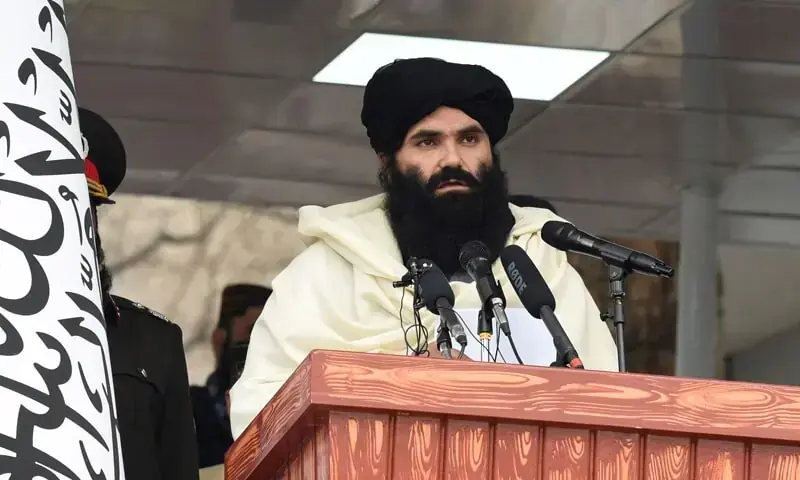
SIRAJUDDIN Haqqani’s claim that Taliban-ruled Afghanistan is not a threat to any state and that the doors for talks are open in good faith would be welcome if it were not so plainly at odds with what Pakistan continues to endure.
Islamabad has heard time and again that Kabul will not allow Afghan soil to be used by militants. Yet attacks persist, and the ambush in Karak on December 23, in which five policemen were martyred, shows how the situation remains unchanged.
This contradiction is now the crux of the relationship. Pakistan has sought a written undertaking to rein in the TTP; Kabul has resisted, and ties have deteriorated into skirmishes and border closures, with key crossings shut since October 11 after clashes.
Mediation attempts by friendly states have not broken the impasse. The Taliban’s insistence that it is honouring the Doha commitments flies in the face of UN reporting and independent conflict data that describe Afghanistan as hosting multiple armed outfits and enabling the TTP’s campaign.
The UN sanctions monitoring report transmitted this month again warns that Taliban assurances on militant presence are not credible, while independent assessments show the TTP sustaining a high tempo of attacks.
Pakistan, too, must be clear-eyed about what has and has not worked. Reliance on episodic engagement, or on pressure applied only after major incidents, has not produced verifiable action.
Nor will tit-for-tat escalation create a durable solution as it risks widening conflict, choking border livelihoods, and hardening public attitudes on both sides.
If Mr Haqqani is serious about negotiations, Kabul should begin with measurable steps such as a written commitment to deny the TTP space; the arrest, disarmament or relocation of named commanders away from the frontier; and a joint mechanism to investigate cross-border incidents and share actionable intelligence.
Pakistan should reciprocate by keeping diplomatic channels open, separating humanitarian and trade facilitation from security disputes where possible, and working with mediators to build a process with clear benchmarks and timelines.
Both sides should also revive regular military-to-military contacts to prevent miscalculation again. Ultimately, security cannot be achieved through unilateral assertions.
Afghanistan’s leadership must show that it will prevent cross-border violence with actions that Pakistan and the wider international community can verify. Only then can bilateral relations and regional stability begin to recover.
Published in Dawn, December 28th, 2025
About the Author