With the final episode of Jinn Ki Shadi Unki Shadi now out, one thing is clear: HUM TV has delivered a drama that entertained and expanded our expectations of what Pakistani television is capable of.
At a time when repetitive family sagas dominate prime time TV, this horror-comedy-romance hybrid, directed by Saif e Hasan, proved that audiences are more than ready for experimentation, freshness, and imaginative storytelling.
A rare, risk-taking initiative by HUM TV
For years, our TV screens have been filled with saas-bahu tussles, domestic conspiracies, and household feuds that stretch for weeks. Jinn Ki Shadi Unki Shadi stood out because it dared to be different. Its premise — a human and a jinn navigating an unusual love story — was fresh without being trivial, whimsical without being childish.
We must give credit where it’s due: HUM TV took a creative risk in a landscape where ratings often dictate safe, formulaic content. Backing a script that blends supernatural elements, humour, romance, and folklore — and doing it with conviction — is not something most channels attempt. In a television environment where some dramas exceed 40 episodes simply because they “do well,” HUM TV deserves applause for keeping the narrative tight at 26 episodes.
There were no filler tracks inserted to boost TRPs, no recycled flashbacks, and no stretched-out episodes. Every instalment served a purpose, maintaining momentum right to the finale.
This is exactly the sort of initiative Pakistani TV needs if it wants to evolve. It reminded the industry that audiences crave novelty. We are not tired of television — we are tired of repetition.
A story that stood out — two families, one magical premise
One of the show’s greatest strengths was its simplicity and clarity. There were no confusing subplots, 10 supporting families, or unnecessary villains. The narrative revolved around just two households: the human Ali family, with their warmth, confusion, and relatable chaos, and the jinn Azaar family, mysterious but surprisingly human in their emotions.
This tight structure made the story easy to follow and emotionally grounded, allowing viewers to invest in relationships, not distractions — a quality our dramas often forget.
The riddles that made the journey magical
One of the most delightful and underrated aspects of Jinn Ki Shadi Unki Shadi was the clever use of peheliyan — the coded riddles left behind in Ali’s father’s diary. These riddles guided the characters toward the hatiyar, the weapon crucial for Ali to face the jinns, creating a subtle intellectual thread throughout the narrative.
Each riddle invited viewers, including children, to solve it alongside the characters. This treasure-hunt-style progression kept the momentum alive and added a layer of adventure. The quest for the weapons never felt forced; it became a playful mystery that bound the episodes together and made every reveal satisfying.
A casting masterclass — every role felt meant to be
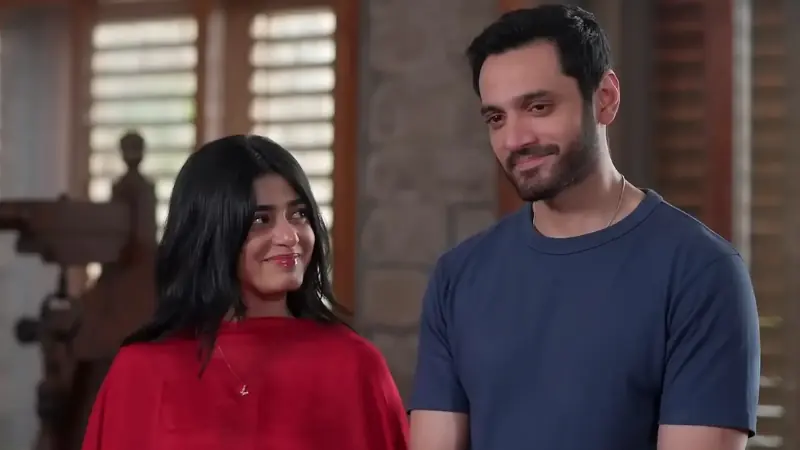
If Jinn Ki Shadi Unki Shadi will be remembered for one thing beyond its storytelling, it’s the casting. Wahaj Ali as Ali was a revelation: confused, romantic, sometimes silly, and entirely lovable, he provided a refreshing departure from the brooding, alpha-male heroes dominating our screens. The director allowed him to be vulnerable, funny, and utterly human — and the result was magic.
Arslan Naseer and Sidra Niazi, as Ali’s older brother and bhabhi, brought warmth, humour, and sincerity to the screen, their bond feeling lived-in and real. On the supernatural side, Syed Jibran as Azaar and Tamkenat Mansoor as Chami were standouts — powerful yet restrained, mysterious yet emotionally layered — giving the jinn characters dignity and personality instead of caricature.
Sehar Khan as Khushi, Nadia Afgan, Romaisa Khan, and the unforgettable Changez Chacha delivered performances that fit seamlessly into the story’s fabric.
Together, this ensemble proved that when casting is thoughtfully done, even minor roles enhance the world of the drama. For a closer look at early performances and character dynamics, readers can also see my previous article, “No ghosting here — Jinn Ki Shadi Unki Shadi is a keeper.”
Treatment, aesthetic, and production — remarkably distinct
The drama’s execution deserves high praise. The atmospheric haveli, thoughtfully selected locations, carefully controlled lighting, and surprisingly sophisticated VFX combined to create a visually captivating experience. From costumes to sound design, everything felt intentional, crisp, and cinematic.
While Pakistani dramas often excel in emotional storytelling, they rarely invest in creating a fully immersive world. Jinn Ki Shadi Unki Shadi, however, embraced world-building completely, making both the human and jinn realms feel tangible and believable. It demonstrated that investing in visual storytelling truly pays off — and that our television can exceed expectations when given the opportunity.
A surprise hit among children and teens
An unexpected but heartening outcome was the show’s popularity among children. It revived the tradition of watching the 8pm drama with families — something many of us grew up with. Today, children often drift to YouTube or foreign streaming content, as our television doesn’t offer much for them. Not every household has Netflix, and not all streaming shows align with Pakistani sensibilities. Jinn Ki Shadi Unki Shadi filled that gap beautifully: safe, funny, imaginative, and wholesome — without ever being childish.
The finale and the demand for season 2
The last two episodes genuinely surprised viewers. Few expected it to end so soon, and yet, the finale felt complete while leaving audiences wanting more — a rare balance.
Very few Pakistani dramas generate genuine, organic demand for a second season. But this one has. Fans are already asking for a second season. They want more — more of the world, more of the characters, more of the magic. Whether a sequel will happen or not remains to be seen, but the fact that people want it is proof that the experiment succeeded. Pakistani viewers do appreciate creativity. They do embrace new genres. And they do reward bold storytelling.
Why we need more dramas like this
Jinn Ki Shadi Unki Shadi leaves behind a powerful message for Pakistani television. Audiences appreciate originality, children and families are hungry for wholesome entertainment, and shorter, well-paced dramas have more impact than 40-episode marathons. Experimentation is not a risk — it’s the future, and investing in creativity, casting, production, and VFX pays off.
Pakistani television doesn’t lack talent; it lacks variety. Jinn Ki Shadi Unki Shadi proves that when channels dare to try, everyone wins. If the industry wants to grow, diversify, and pull younger audiences back to television, this is the direction to move in.
About the Author