 Follow on Google News
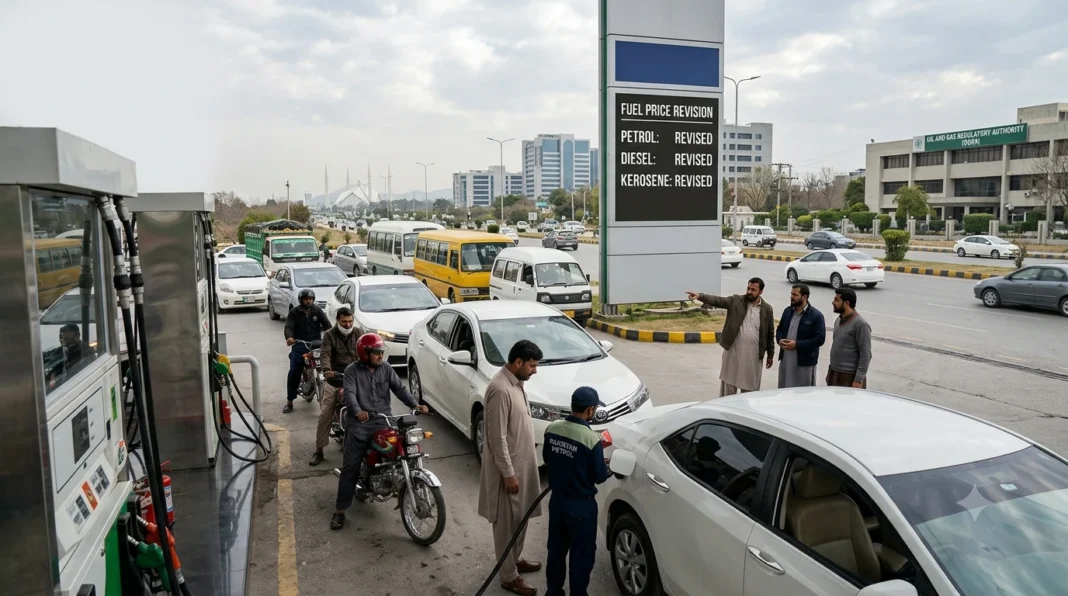

The price of petrol has dropped slightly in Pakistan; however, the price of diesel and kerosene has increased.
Since Pakistan adopted the new daily pricing system for fuel on 21st July 2026, prices of petrol and high speed diesel (HSD) have increased, while the price of kerosene (Kerosene) in Pakistan has become lower.
The prices of petroleum products have been revised by the Oil and Gas Regulatory Authority (OGRA) and the revised prices will come into effect from Tuesday, according to the government’s new price review system.
The latest adjustment in petrol price is of 35 paisa per litre and it would give some relief to motorists. In contrast, the price of the high speed diesel has increased by Rs5.71 per litre while the price of kerosene has now gone up by Rs5.93 per litre.
The price increase on diesel fuel will probably be more pronounced than the decrease on petrol fuel. Most of the freight systems, public buses, farm and industrial machinery and equipment in Pakistan are powered by diesel. Higher fuel prices can thus impact on transportation and logistics costs.
Kerosene use has also significantly increased, and remains significant in rural and remote areas, making a contribution to the cost of household energy for some families.
Why are prices different on day-to-day basis?
The new adjustment comes as a part of Pakistan’s new pricing policy of petroleum products which has replaced the fortnightly adjustment system with a daily adjustment system.
The oversight of oil price has been shifted from 2-week lag from the International prices to the weekly average price of oil over the last seven days. The objective is to increase oil price elasticity of domestic fuel prices.
The regulator is also permitted to change the rates daily without having to seek market approval on a regular basis to change the rate. On Fridays however, prices will be the same as the weekend.
The officials claim that the system is designed to make it more transparent and make the pricing model closer to international practice in Pakistan.
As the global oil market affects the local price of fuel products, this impact is significant.
The introduction of the daily pricing of the gas is a welcome step by Pakistan at a time when international oil markets are struggling due to volatility.
Conflict in the Middle East also has contributed to rising crude oil prices; fears have risen along supply routes. Now, any price surge in international fuel prices is likely to be seen earlier in the domestic fuel prices in Pakistan.
This would also mean that motorists and businesses would have to deal with more numerous, but smaller, adjustments at the pump, instead of waiting for big ones every two weeks.
New Rules for Fuel Imports
In addition to the price changes, the government also adjusted the import tariffs for petroleum in 2026-27.
The new policy will continue to keep Pakistan State Oil (PSO) in charge of importing HSD and licensed oil marketing companies will be allowed to import petrol according to market shares.
The government has also put in place tougher compliance rules. Failure to make the commitments or supply obligations could mean that firms could be denied the opportunity to import fuel.
The price of kerosene and light diesel oil will also be adjusted on a daily basis.
For the consumer, what it entails.
The increase in diesel prices for private vehicles is a bit of a comfort, while the high price may have more economic implications. Increased costs for diesel can affect transport fares and freight rates and the transport of goods, especially in the case of fluctuating international oil prices.
Pakistan is currently examining the fuel prices on a daily basis and consumers can expect the prices of petroleum products to be adjusted more often in this market, which is in constant flux.
Stay Connected with Daily Aitadal
Get the latest business news, market insights, and economic updates
wherever you prefer.
Add Daily Aitadal to Preferred Sources and see more of our stories in Google Search and Top Stories.