Follow on Google News
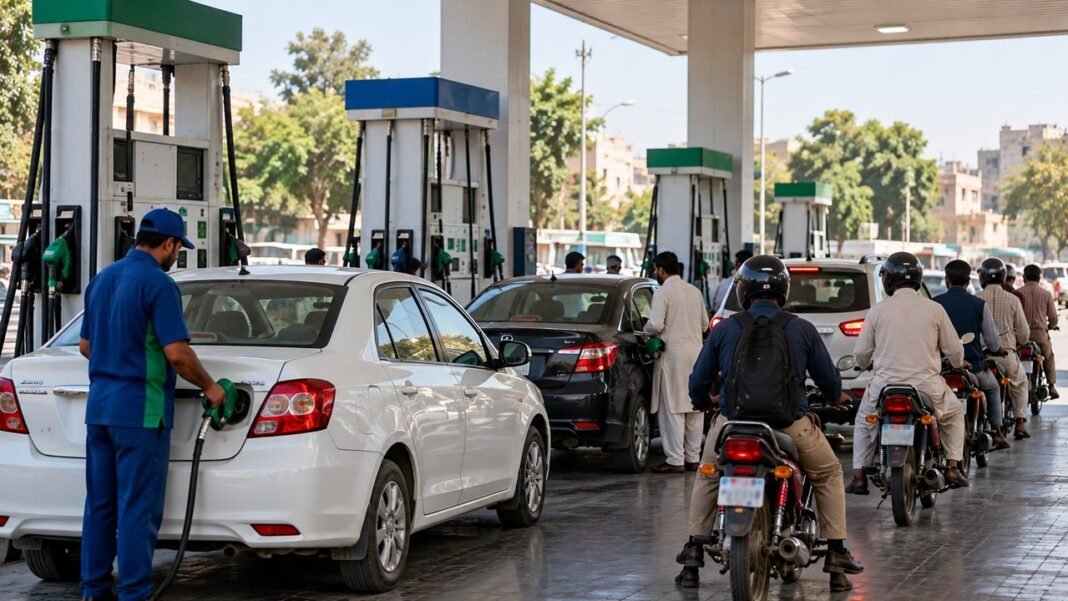

Pakistan’s fuel prices currently in force leave petrol unchanged at Rs 377.71 per litre, while high-speed diesel is priced at Rs 393.66 per litre following an increase of Rs 1.91.
The rates were announced on October 24 and took effect for the October 24–26 period. They remain relevant to households, commuters, transport operators and businesses assessing their daily expenses on Monday, October 26. The figures do not represent a fresh fuel price announcement on Monday.
Under the reported revision, petrol remained at Rs 377.71 per litre, with no change from its previous rate. High-speed diesel, meanwhile, increased from Rs 391.75 to Rs 393.66 per litre.
The reported table also lists light diesel oil at Rs 275.24 per litre and kerosene at Rs 330.96 per litre.
Fuel prices have a direct bearing on the cost of travelling, transporting goods and operating vehicles. Petrol expenses affect private motorists and motorcycle users, while diesel costs are particularly relevant to freight transport and other activities that depend on diesel-powered vehicles and machinery.
An increase in diesel prices can add to operating expenses for transport businesses, potentially putting pressure on the cost of moving food, agricultural supplies and other essential goods. Households may also feel the impact when higher transport expenses feed into the wider cost of goods and services.
For families managing tight budgets, petrol remaining unchanged offers no additional increase in the direct cost of filling a vehicle’s tank at the current rate. However, the existing price level still represents a significant expense for regular commuters.
The latest figures should be understood as the rates already in force following the October 24 revision, rather than a new reduction or increase announced on October 26.
Consumers and businesses should check official notifications for any subsequent changes before making financial decisions based on fuel prices. Until a new revision takes effect, the reported rates provide the relevant reference for assessing current petrol, diesel, light diesel oil and kerosene costs.
The difference between the unchanged petrol rate and the higher diesel price illustrates how individual fuel categories can move differently within the same revision period.
Stay Connected with Daily Aitadal
Get the latest business news, market insights, and economic updates
wherever you prefer.
Add Daily Aitadal to Preferred Sources and see more of our stories in Google Search and Top Stories.