 Follow on Google News
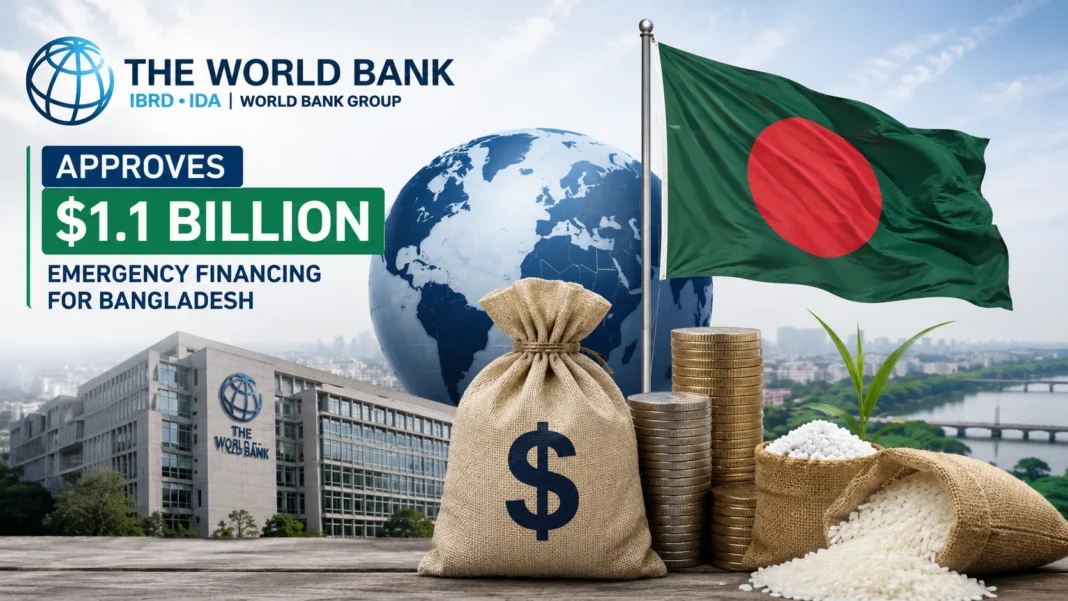

DHAKA: The World Bank has approved $1.1 billion in emergency financing for Bangladesh to help the country manage rising food and energy costs, protect vulnerable families and strengthen economic stability amid global market pressures.
According to the World Bank, the funding will support two emergency programmes aimed at reducing the impact of higher prices for fuel, fertiliser and essential food items that have placed additional pressure on Bangladesh’s economy.
A total of $300 million has been allocated to improve food security by financing the import of around 600,000 metric tonnes of fertiliser for upcoming rice cultivation. Bangladesh relies heavily on imported fertiliser, making its agricultural sector vulnerable to global supply disruptions.
The remaining $713 million will be used under an emergency response programme to provide cash assistance to low-income households, support small businesses and help maintain essential public services.
The financing will also assist the government in covering fuel and energy imports required to keep hospitals, electricity networks, water supplies and food distribution systems operating without disruption.
World Bank officials said the package is designed to help Bangladesh respond quickly to external economic shocks while protecting jobs, livelihoods and critical services.
Bangladesh is also seeking additional financial support from international development partners, including the International Monetary Fund (IMF), as it works to strengthen foreign exchange reserves and ease pressure on public finances following higher energy import costs.
Officials say the emergency funding is expected to provide immediate economic relief while helping the country maintain stability during a period of global uncertainty.
Stay Connected with Daily Aitadal
Get the latest business news, market insights, and economic updates
wherever you prefer.
Add Daily Aitadal to Preferred Sources and see more of our stories in Google Search and Top Stories.